
Article
Operating models
What should a workflow assessment produce?
A useful workflow assessment connects the operating picture, evidence, priorities and next decision. See what to ask for before agreeing the work.
Read article →

Ideas you can put to work
Practical guidance and examples for improving how your business operates. Browse by industry, explore an operating problem, or see how an improvement could work.
Articles explain a subject or method. Practical examples show how a workflow could improve. Cross-industry guidance applies to many kinds of business.
Browse resources by industry or operating question.
Business decisions, human and AI workflows, useful data, economics, and information safeguards that apply across industries.
Article
Operating models
A useful workflow assessment connects the operating picture, evidence, priorities and next decision. See what to ask for before agreeing the work.
Read article →
Article
Economics & outcomes
Use a bounded pilot to resolve uncertainty before expanding investment. Ninety days can be a planning device, not a promise.
Read article →4 min
Article
Governance & trust
An inventory is the beginning. Every active workflow also needs an owner, an identity, a permission boundary, and a retirement path.
Read article →4 min
Article
The agentic shift
Look past the label. Ask what the system can complete, which permissions it holds, and how you can verify the result.
Read article →5 min
Article
Human + AI
Use AI to prepare a better leadership discussion without letting fluent agreement replace dissent, evidence, or accountable judgment.
Read article →5 min
Article
Economics & outcomes
Connect model consumption, tools, human review, and recovery to a business unit that finance and operations can both understand.
Read article →4 min
Article
Operating models
AI can help reviewers navigate a data room and identify questions. Legal, financial, and commercial conclusions still require qualified assessment.
Read article →4 min
Article
Governance & trust
Use automation to assemble evidence and handle approved routines. Treat disruptive security actions as consequential operating decisions.
Read article →4 min
Article
Governance & trust
Make approved knowledge easier to find without making every employee, client, or project record visible to everyone.
Read article →4 min
Article
Governance & trust
Giving a model access to documents can improve grounding. It does not remove the need to verify sources, permissions, and the answer itself.
Read article →4 min
Article
Operating models
Voice and chat can make information easier to reach. Important actions still need identity, evidence, confirmation, and a visible result.
Read article →4 min
Article
The agentic shift
Agent-driven execution changes the economics of software, but it does not remove licensing, integration, or accountability.
Read article →4 min
Article
Governance & trust
Be able to reconstruct the request, evidence, approval, attempted action, and verified outcome without pretending to inspect a model's private thoughts.
Read article →4 min
Article
Economics & outcomes
Evaluate a specialist tool by its supported work, evidence, data boundary, review burden, and exit path.
Read article →4 min
Article
Economics & outcomes
Before asking an agent to act on enterprise information, make sure the records agree on identity, meaning, freshness, and authority.
Read article →4 min
Article
The agentic shift
Give a system more independence only where its evidence, permissions, and recovery behavior justify it.
Read article →4 min
Article
Human + AI
AI can prepare a brief quickly. The professional's value is knowing what to trust, what is missing, and what the evidence can support.
Read article →4 min
Article
Economics & outcomes
Model the cost of the next block of demand, including supervision, support, failure, and the capacity steps between them.
Read article →5 min
Article
Human + AI
Automating reminders and summaries does not resolve competing priorities. Redesign the decisions around the coordination work.
Read article →5 min
Article
Economics & outcomes
Test a lean business against support, continuity, decision capacity, and the work that automation cannot quietly absorb.
Read article →4 min
Article
Human + AI
An approval button only protects the business when the reviewer has evidence, time, authority, and a real alternative.
Read article →4 min
Article
Human + AI
The manager's job becomes clearer when completed work, unresolved exceptions, and staff responsibilities share one operating picture.
Read article →5 min
Article
Human + AI
Turn policies and working expectations into explicit configuration, test cases, and permissions instead of relying on a longer prompt.
Read article →5 min
Article
Governance & trust
Hosting location matters, but the complete data flow, access model, contracts, and operational controls determine the actual boundary.
Read article →4 min
Article
Governance & trust
Make sensitive requests survive an independent verification process instead of asking staff to judge whether a voice sounds real.
Read article →4 min
Article
Governance & trust
A well-written answer can still rest on a corrupted source. Protect the path from record change to retrieval and use.
Read article →4 min
Article
Economics & outcomes
Separate copyright, confidentiality, contractual rights, and access control before deciding what information belongs in an AI workflow.
Read article →4 min
Article
Governance & trust
Clear responsibilities, tested controls, and an honest account of scope can make procurement and oversight more concrete.
Read article →4 min
Article
The agentic shift
Before automating the handoffs, decide which handoffs should exist. Faster activity is not the same as a better process.
Read article →4 min
Article
Operating models
Leadership should define the operating outcome and decision boundaries. Frontline evidence should shape how the change is designed.
Read article →4 min
Article
Economics & outcomes
A smaller on-device model can be useful when the task, hardware, and operating constraints align. Bigger and local are not measures of quality by themselves.
Read article →4 min
Article
Operating models
Reliable unattended work depends on durable state, bounded permissions, safe retries, and a morning view of what actually happened.
Read article →4 min
Article
Human + AI
Automation can prepare the facts. Trust often depends on how a person interprets the situation and takes responsibility.
Read article →4 min
Article
Human + AI
Combine AI-supported preparation with human expertise, then connect the recommendations to a controlled implementation.
Read article →4 min
Article
Economics & outcomes
Measure the path to accepted work. Time saved in one activity may move the bottleneck rather than remove it.
Read article →5 min
Article
Human + AI
Build the team around the decisions, evidence, and delivery work the project actually requires.
Read article →4 min
Article
Governance & trust
Connect values to defined evidence, review criteria, and accountable decisions rather than asking a model to invent the company's moral position.
Read article →4 min
Article
Physical operations
Decide what space the work needs before turning occupancy numbers into a property decision.
Read article →4 min
Article
Economics & outcomes
Shared tools make execution, customer knowledge, reliable delivery, and lawful expertise more important to distinguish.
Read article →4 min
Article
Operating models
Multiple specialists can help divide a complex task. The business still needs one reliable account of state, authority, and completion.
Read article →4 min
Article
Human + AI
A smaller service queue may still be a harder service job. Design staffing and escalation around the cases that remain.
Read article →5 min
Article
The agentic shift
AI systems need owners, permissions, evaluation, and retirement plans. They do not become employees simply because we give them job titles.
Read article →4 minClient relationships, calls, scheduling, capacity, service economics, and the systems behind an appointment-based business.

Article
Salon operations
A client may want to book after the shop closes. That creates an operating question: can the business accept a useful request without implying that the shop is open or an appointment is already confirmed?
Read article →3 min
Article
Salon operations
For years, automation meant detachment. Flat prompts. Rigid menus. Synthetic voices that signaled efficiency but not hospitality. In a relationship-driven business, that tone can conflict with the experience clients expect. Test the actual reaction rather than assuming a…
Read article →3 min
Article
Salon operations
Client communication behavior has evolved. What was once considered efficient is now perceived by many as intrusive or inconvenient.
Read article →2 min
Article
Salon operations
What distinguishes one haircut price from another? Skill, location, service complexity, time, costs and positioning can all matter. The quality of attention may be part of that experience, but quiet service alone does not justify a higher price.
Read article →2 min
Article
Salon operations
Operating models need to change when the business's actual constraints change. More technology is not automatically a better response. A shop may need clearer callback ownership, a revised booking rule, different staffing or a supported automated task.
Read article →3 min
Article
Salon operations
Precision work requires concentration. Whether executing a technical fade or applying a complex color treatment, attention is part of the product. A ringing phone fractures that attention.
Read article →2 min
Article
Salon operations
In hospitality and beauty services, gratuities are typically viewed as staff income rather than operational data. While the funds belong to the service provider, the behavioral pattern surrounding them offers valuable insight.
Read article →3 min
Article
Salon operations
Every business owner sees the same number at the top of the daily report: Total Sales. It is large. It feels validating. It reflects effort. But gross revenue measures activity, not performance.
Read article →2 min
Article
Salon operations
Within the salon industry, new client acquisition often receives disproportionate attention. Search rankings, social visibility, and paid advertising campaigns become primary focus areas.
Read article →2 min
Article
Salon operations
Business insight can require authorized data access. Learn which records an implementation may need, how to review provider roles and retention, and which boundaries should be documented…
Read article →3 min
Article
Salon operations
If you have operated a salon or studio for decades, the phone is not a utility. It is an extension of your reputation. Long-term clients expect familiarity, continuity, and professionalism.
Read article →3 min
Article
Salon operations
Every established operator eventually confronts the same tension. Your current booking and point-of-sale system may not be perfect, yet it contains years of operational history, service records, formulas, staff scheduling patterns, and client relationships.
Read article →3 min
Article
Salon operations
Unattended appointments are not merely inconveniences. They represent unused capacity, disrupted schedules, and preventable revenue leakage. In appointment-based businesses, time is inventory.
Read article →2 min
Article
Salon operations
An owner should not have to search through a reporting system to discover an urgent operating issue. Useful summaries can bring the important questions forward while leaving the supporting records available for inspection.
Read article →2 min
Article
Salon operations
Growth often triggers expansion. A new treatment is introduced. A premium tier is added. A bundled package appears. Over time, what began as a focused service offering becomes layered, fragmented, and difficult to navigate.
Read article →2 min
Article
Salon operations
Appointment-based businesses often operate on retail logic: open in the morning, close in the evening, compress demand into a fixed window.
Read article →2 min
Article
Salon operations
Bookings, cancellations, payments and service durations can help answer a practical operating question. Start with that question rather than buying another reporting tool or asking the team to collect everything.
Read article →3 min
Article
Salon operations
A front desk combines different responsibilities: greeting, answering questions, scheduling, taking payments and resolving exceptions. These tasks do not all require the same tools or level of human judgment.
Read article →2 min
Article
Salon operations
A phone call during a cut creates a real trade-off: respond to a new request or protect attention for the person in the chair. A more dependable intake process can reduce that conflict, but no phone, network or…
Read article →2 min
Article
Salon operations
Staff turnover in appointment-based businesses can have multiple causes, including compensation, workload, management, and operating conditions. Commission splits, booth rent, and bonus structures receive most of the scrutiny.
Read article →2 min
Article
Salon operations
A delayed response can make a suitable appointment request harder to complete. It is still only one part of the outcome: service fit, available capacity, consent and the accuracy of the next step matter too.
Read article →2 min
Article
Salon operations
An unanswered call is an intake event, not proof that paid demand was lost. This article shows how to distinguish live response, callback recovery, booking, and completed service before…
Read article →4 min
Article
Salon operations
Artificial intelligence is in a visible phase of adoption. It can write, summarize, and converse with surprising fluency. In creative work, that flexibility is an advantage.
Read article →3 min
Article
Salon operations
Repetitive phone information can compete with the relationship work a service team is there to do. That makes the task mix worth reviewing, not a reason to declare that every routine request belongs to a machine.
Read article →2 min
Article
Salon operations
At the end of a long day, a calendar filled with names can look like a win. It feels productive. It feels maximized.
Read article →3 min
Article
Salon operations
When growth slows, a service business may consider advertising or promotions. First check whether the limiting factor is qualified demand, usable appointment time, pricing, or another constraint.
Read article →5 min
Article
Salon operations
A full calendar creates psychological comfort. Every slot contains a name. Every chair is occupied. The week appears secure.
Read article →2 min
Article
Salon operations
In premium service environments, the deliverable is not limited to technical execution. It includes attention, presence, and continuity. When a client sits in the chair, there is an implicit agreement: for the duration of the appointment, focus is…
Read article →2 min
Article
Salon operations
Discounting is one of the most accessible levers in a service business. When demand softens, offering a promotion can generate immediate activity. The schedule fills. Transactions increase.
Read article →3 min
Article
Salon operations
The third visit is not a universal profit threshold. Follow acquisition cost, per-visit contribution, and actual return behavior to find the payback point for your services and clients.
Read article →3 min
Article
Salon operations
Phone conversations can be difficult when people use different languages, accents or service terminology. That can affect callers and staff of any background. Nationality is not a measure of communication ability or professional skill.
Read article →3 min
Article
Salon operations
Appointment-based businesses are governed by high-leverage decisions. Adjust pricing. Modify operating hours. Remove or introduce services.
Read article →2 min
Article
Salon operations
Technical terminology often creates unnecessary anxiety. “Cloud.” “Algorithm.” “Integration.” In practice, these concepts are less mysterious than they sound.
Read article →3 min
Practical example
Consultation & appointment timing
Use consultation information and actual service history to allocate more realistic time while preserving stylist review and professional judgment.
Illustrative workflow, not a documented customer case study.
Explore example →
Practical example
Lash & brow studios
Relate bookings, service combinations, product use, shelf life, purchasing, and pricing to make margin and avoidable waste easier to understand.
Illustrative workflow, not a documented customer case study.
Explore example →
Practical example
Capacity & scheduling
A calendar can look full while small gaps, mismatched durations, and misplaced buffers reduce the time clients can actually book.
Illustrative workflow, not a documented customer case study.
Explore example →
Practical example
Capacity & scheduling
A busy Friday and Saturday can mask substantial unused capacity during the rest of the week.
Illustrative workflow, not a documented customer case study.
Explore example →
Practical example
Cancellations & revenue recovery
A cancellation affects more than one booking when the opening is not offered or refilled before the time expires.
Illustrative workflow, not a documented customer case study.
Explore example →
Practical example
Retention & client cadence
A client can remain active in a report while returning less often, spending less, or quietly moving outside their normal rhythm.
Illustrative workflow, not a documented customer case study.
Explore example →
Practical example
New-client retention
First-visit volume does not establish durable growth if too few new clients progress into a repeat relationship.
Illustrative workflow, not a documented customer case study.
Explore example →
Practical example
Rebooking & client follow-through
A client may intend to return but lose momentum when the next visit depends on remembering and restarting the booking process.
Illustrative workflow, not a documented customer case study.
Explore example →
Practical example
Service margin & client value
Stable visit counts can conceal changes in service mix, retail activity, pricing, or the cost of delivery.
Illustrative workflow, not a documented customer case study.
Explore example →
Practical example
Pricing & concessions
Repeated discounts and complimentary services are difficult to manage when their reasons and later outcomes are not recorded.
Illustrative workflow, not a documented customer case study.
Explore example →
Practical example
Workforce performance & retention
Monthly sales can look strong while new-client conversion, client concentration, or long-term relationship value tells a different story.
Illustrative workflow, not a documented customer case study.
Explore example →Field services, customer care, repair, rental, and administrative workflows with clearer handoffs and usable operating records.

Article
Draft beer and keg-room operations
Compare draft beer flow with POS serving sizes and documented waste, then verify cleaning through a separate technician record and commissioning pilot.
Read article →10 min
Article
Kitchen displays and order routing
Compare a supported order feed with a printer bridge, preserve modifiers and cancellations, and test station timing and recovery during restaurant service.
Read article →10 min
Article
Self-service kiosks
Design a restaurant kiosk that reconciles payment, kitchen tickets and receipts when a card terminal, network or printer fails, and test where an ESP32 host fits.
Read article →10 min
Article
Operating models
Before replacing field service software, test a complete job workflow, the exceptions, and who owns the next step. Keep capabilities that already work.
Read article →
Article
Appliance service reimbursement
Connect completed repairs to complete claims, payer responses, and reconciled payment instead of losing receivables between systems.
Read article →5 min
Article
Managed IT service exit
Verify that the receiving team can administer and recover client systems before removing the departing provider's access.
Read article →4 min
Article
Equipment rental handovers
Pair departure and return observations so condition disputes and missing accessories can be investigated without guessing responsibility.
Read article →5 min
Article
Commercial laundry reconciliation
Keep customer ownership and quantities connected through processing splits, rewash, holds, and dispatch.
Read article →4 min
Article
Catering order changes
Keep purchasing, preparation, and service aligned when a client changes quantities or menu requirements close to an event.
Read article →5 min
Article
Pest service continuity
Give the next technician a clear site history with mapped observations, unresolved responsibilities, and specific follow-up questions.
Read article →5 min
Article
Waste collection service evidence
Resolve missed-pickup disputes by separating truck arrival, attempted service, confirmed collection, and the approved remedy.
Read article →4 min
Article
Auto repair operations
Keep the revised estimate, the customer's decision, the work performed, and the invoice connected without slowing every job down.
Read article →5 min
Article
Moving and storage custody
Follow customer property through pickup, storage, crew transfers, and delivery with item-level observations and visible handoff gaps.
Read article →4 min
Article
Bookkeeping operations
Make missing client evidence specific, assign the next action, and separate an uploaded file from a cleared accounting question.
Read article →5 min
Practical example
HVAC & plumbing
Bring service requests, dispatch, technician availability, equipment history, inventory, and outcomes into one understandable operating flow.
Illustrative workflow, not a documented customer case study.
Explore example →
Practical example
Commercial cleaning
Connect property information, estimating assumptions, mobile work, verification, labor, and billing so quoting and quality review become repeatable.
Illustrative workflow, not a documented customer case study.
Explore example →
Practical example
Landscaping
Use verified property information, job-cost history, crew capability, equipment, and geography to reduce avoidable travel and improve planning.
Illustrative workflow, not a documented customer case study.
Explore example →
Practical example
Pet care
Connect reservations, care requirements, facility capacity, staffing, and add-on services to make peak demand and quieter periods easier to manage.
Illustrative workflow, not a documented customer case study.
Explore example →
Practical example
Fitness studios
Connect attendance, membership, booking, cancellation, and communication records so a studio can recognize meaningful changes before a member is already gone.
Illustrative workflow, not a documented customer case study.
Explore example →Equipment, maintenance, production, connected systems, operational data, and controlled automation.

Article
Hazardous-location procurement review
Resolve site classification and exact equipment approval evidence before buying or demonstrating a sensor for a potentially hazardous area.
Read article →4 min
Article
Clamp-on flow feasibility
Establish pipe, fluid, access, and validation facts before using a nonintrusive flow reading to guide operating decisions.
Read article →4 min
Article
Photoelectric presence detection
Test transparent and reflective product variants against a reference count before treating an optical detector as production-ready.
Read article →5 min
Article
Sensor enclosure suitability
Review the complete installed sensor assembly against washdown, dust, chemicals, and condensation rather than relying on the sensor body's rating alone.
Read article →5 min
Article
Tank-level method selection
Compare radar and ultrasonic candidates against the tank's real material, geometry, foam, and condensation conditions.
Read article →4 min
Article
Sensors & Telemetry
Edge means computing near the equipment; cloud means remote computing services. Split each function by its timing, data, and support needs.
Read article →8 min
Article
Physical operations
Connect meters, operating context, and reporting boundaries before asking AI to recommend a lower-impact operation.
Read article →4 min
Article
Steam-trap survey follow-up
Connect suspected steam-trap faults to qualified confirmation, authorized maintenance, and a documented recheck.
Read article →5 min
Article
Physical operations
Compare opportunities by the operating decision, available evidence, integration effort, and consequences of being wrong.
Read article →4 min
Article
Physical operations
A useful model earns its way toward action through validation, known limits, and an engineered decision boundary.
Read article →4 min
Article
Engineering Management
A useful pilot proves defined feasibility, evidence quality, operating value, limitations, and scale conditions rather than merely producing a demonstration.
Read article →2 min
Article
Systems Integration
A separate integration boundary can translate machine state into business context without making production control depend on an enterprise application.
Read article →2 min
Article
Production & Operations
Follow one production route from readiness to accepted output. Use linked records to examine competing explanations, then put a narrow proposal in front of the people who can authorize it.
Read article →8 min
Article
Energy & Resource Efficiency
Connect metered consumption to machine state, production time, accepted output, and product context before judging efficiency.
Read article →2 min
Article
Sensors & Telemetry
Compare supported interfaces, external observation, and replacement by what the machine still does well and what the proposed change would demand.
Read article →8 min
Article
Predictive Maintenance
Compare scheduled work, observed-condition triggers and forecasts by the failure they address, the consequence and the value of an intervention.
Read article →8 min
Article
Industrial Cybersecurity
Connectivity adds operational value and a new trust boundary that requires identity, segmentation, access control, monitoring, and recovery.
Read article →2 min
Article
Predictive Maintenance
Connect equipment identity, operating conditions, observations, inspection findings and completed work so maintenance history supports conclusions you can defend.
Read article →8 min
Article
Sensors & Telemetry
Keep observations locally, make stale information visible, and recover history without mistaking late records for current conditions.
Read article →8 min
Article
Industrial Data Architecture
Turn a confusing operating report into a clear question and a small working explanation. Start with the people who need to use it, not an enterprise-wide software project.
Read article →7 min
Article
Reliability & Resilience
Edge failure behavior should preserve local safety, expose lost visibility, protect buffered evidence, and support deliberate recovery.
Read article →2 min
Article
Sensors & Telemetry
Start with a decision, choose the evidence it needs, and test the path from measurement to review before adding automation.
Read article →9 min
Article
Industrial Intelligence
Compare a direct rule, a context-aware calculation and a learned pattern against the same decision, useful attention and support cost. A model must earn its complexity.
Read article →8 min
Article
Analog measurement interference
Investigate the signal chain before changing process settings when a measurement appears to respond to nearby electrical equipment.
Read article →4 min
Article
Machine Vision & Inspection
Vision is useful when the feature is observable, presentation can be controlled, and uncertain results have an accountable disposition path.
Read article →2 min
Article
Industrial Intelligence
Use AI to organize evidence and propose useful next steps. Map each action to the people and systems that validate, authorize, execute and confirm it.
Read article →8 min
Article
Physical operations
Start with a specific operational exception, connect the relevant records, and keep physical actions within engineered controls.
Read article →4 min
Article
Sensor power and maintenance
Turn the battery-life assumption into a measured operating budget before committing to a replacement interval across the site.
Read article →5 min
Article
Weighing station repeatability
Test repeated and off-center loading under real operating conditions before relying on a weighing station for production decisions.
Read article →5 min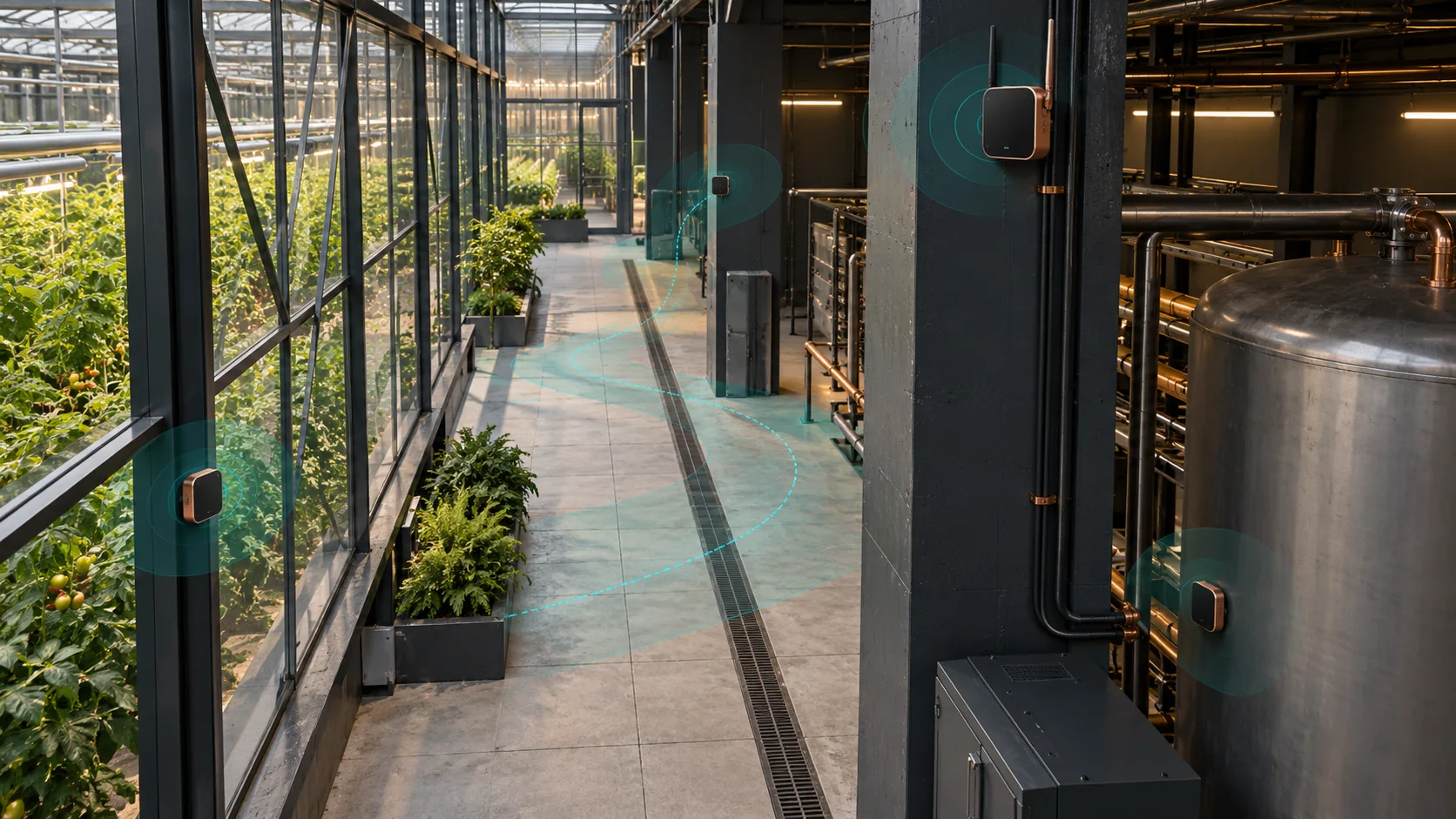
Article
Wireless sensor commissioning
Test the locations, mounting conditions, and message delivery your operation will actually depend on before rolling out a sensor network.
Read article →5 min
Article
Sensors & Telemetry
Choose a measurement method that fits the decision, understand the evidence behind its uncertainty, and know when a result needs further review.
Read article →9 min
Article
Predictive Maintenance
Compare the warning opportunity with the complete response path, including queues, parts, access and verification, before relying on earlier detection.
Read article →8 min
Article
Predictive Maintenance
Challenge a maintenance connector with repeated messages, uncertain responses and competing retries, then inspect the stored request and reconciliation evidence.
Read article →9 min
Article
Predictive Maintenance
Document the specific loss you can accept, check recovery readiness and set clear approval and expiry boundaries before treating an asset as noncritical.
Read article →8 min
Article
Industrial Intelligence
Separate assets, time periods and incomplete outcomes before scoring a warning model. Measure useful attention while making the limits of scarce failure evidence explicit.
Read article →8 min
Article
Industrial Intelligence
Check inputs, operating context and verified usefulness before changing a model or its reference. Keep the evidence needed to continue, restrict, suspend or requalify the advisory service.
Read article →9 min
Article
Industrial Intelligence
Make missing evidence and unsupported conditions visible. Test when an advisory should give no recommendation, alongside useful coverage, incorrect proposals and the review work that follows.
Read article →8 min
Article
Production & Operations
Keep the original production reports. Build a separate, traceable comparison that makes the inputs, assumptions and unresolved questions clear to the people who need to use it.
Read article →7 min
Article
Production & Operations
A corrected report should lead to a clear quality-review request, not an unexplained dashboard color. Learn how to identify the question, gather the right records and hand it to the people who can act.
Read article →8 min
Article
Production & Operations
Help planning and operations agree on what a report actually establishes. Start with the question, locate the records and make the definition easy to inspect.
Read article →8 min
Article
Production & Operations
Before buying a faster dashboard, find out what the existing record can support. A small, non-live review can turn a vague data concern into a clear next question.
Read article →7 min
Article
Industrial Data Architecture
Compare the service promise with what the event records can establish; keep uncertain event order separate from a proven breach.
Read article →8 min
Article
Industrial Data Architecture
Define the operating question, distinguish recent access from repeatable history, and rehearse whether a separate reader can reproduce the required answer.
Read article →7 min
Article
Industrial Data Architecture
Review mapping versions, effective dates and import ambiguities while preserving the original readings; leave gaps or conflicting equipment attribution unresolved.
Read article →8 min
Article
Industrial Data Architecture
Check which peaks, counts, gaps and event details a smaller representation retains before using it to answer an operating question.
Read article →8 min
Practical example
Condition Monitoring
Relate vibration, current, flow, pressure, temperature, runtime, and maintenance history to the pump’s actual operating state.
Possible engineering approach, not a documented customer result.
Explore example →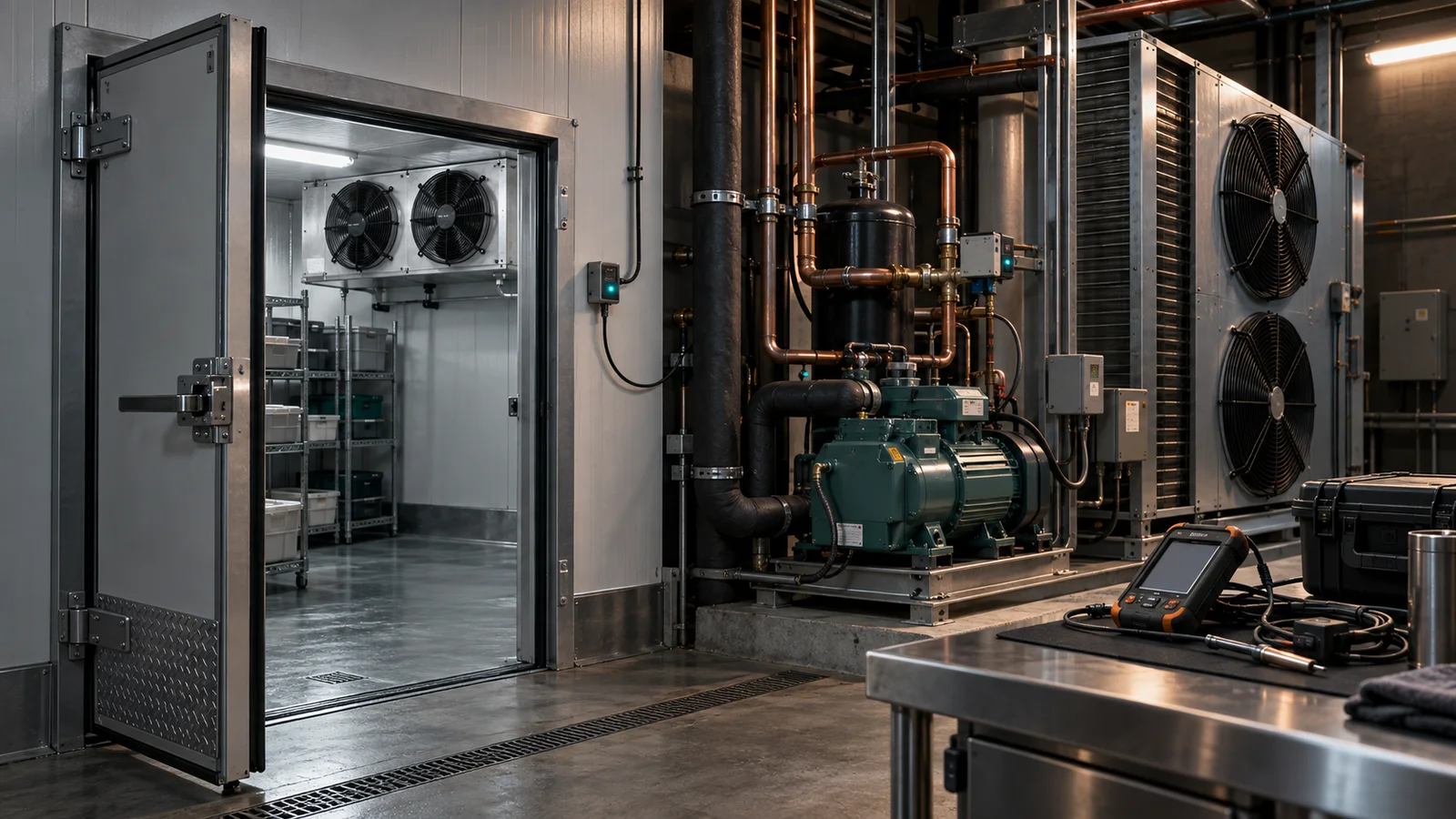
Practical example
Condition Monitoring
Combine equipment state, thermal performance, energy, alarms, service history, and environmental load to identify deterioration before comfort, product, or process is affected.
Possible engineering approach, not a documented customer result.
Explore example →
Practical example
Condition Monitoring
Turn validated, persistent equipment-condition evidence into a traceable maintenance request without allowing an alert to authorize unsafe action.
Possible engineering approach, not a documented customer result.
Explore example →
Practical example
Production & Operations
Connect machine state, queues, changeovers, labor, materials, quality, and schedules to locate the constraint that actually limits useful output.
Possible engineering approach, not a documented customer result.
Explore example →Practical example
Production & Operations
Relate electrical demand and other utilities to products, operating states, schedules, environmental load, and useful output.
Possible engineering approach, not a documented customer result.
Explore example →
Practical example
Production & Operations
Create a lightweight digital thread connecting materials, equipment, settings, people, inspections, exceptions, and outcomes.
Possible engineering approach, not a documented customer result.
Explore example →Practical example
Production & Operations
Replace a single utilization percentage with an accountable view of run, setup, idle, blocked, starved, faulted, and maintenance time.
Possible engineering approach, not a documented customer result.
Explore example →Practical example
Industrial Automation
Use controlled image acquisition and traceable inspection rules to support repeatable quality decisions without hiding uncertainty.
Possible engineering approach, not a documented customer result.
Explore example →Practical example
Sensors, IoT & Telemetry
Preserve useful operating evidence from geographically distributed equipment despite intermittent power, bandwidth, and connectivity.
Possible engineering approach, not a documented customer result.
Explore example →
Practical example
Sensors, IoT & Telemetry
Add qualified measurement, history, and integration around mechanically useful equipment while leaving original machine authority intact.
Possible engineering approach, not a documented customer result.
Explore example →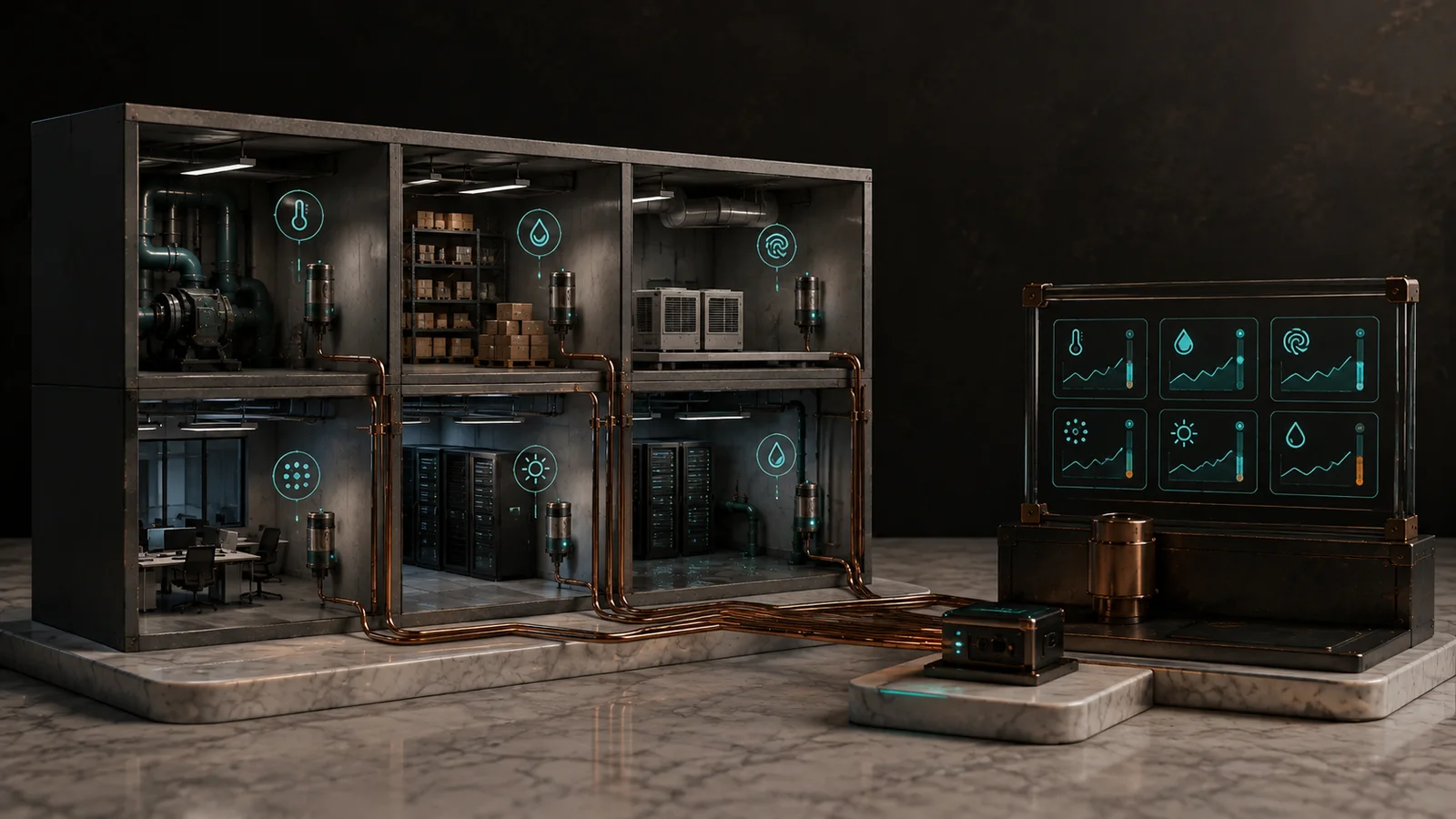
Practical example
Sensors, IoT & Telemetry
Connect environmental measurements across facility zones so changing conditions, recurring excursions, and response priorities become visible.
Possible engineering approach, not a documented customer result.
Explore example →
Practical example
Sensors, IoT & Telemetry
Connect appropriate electrical metering to equipment and production context so load patterns, demand, and changing electrical behavior can be investigated.
Possible engineering approach, not a documented customer result.
Explore example →
Practical example
Sensors, IoT & Telemetry
Connect flow, pressure, level, temperature, and equipment state across a physical network to understand consumption, balance, and abnormal behavior.
Possible engineering approach, not a documented customer result.
Explore example →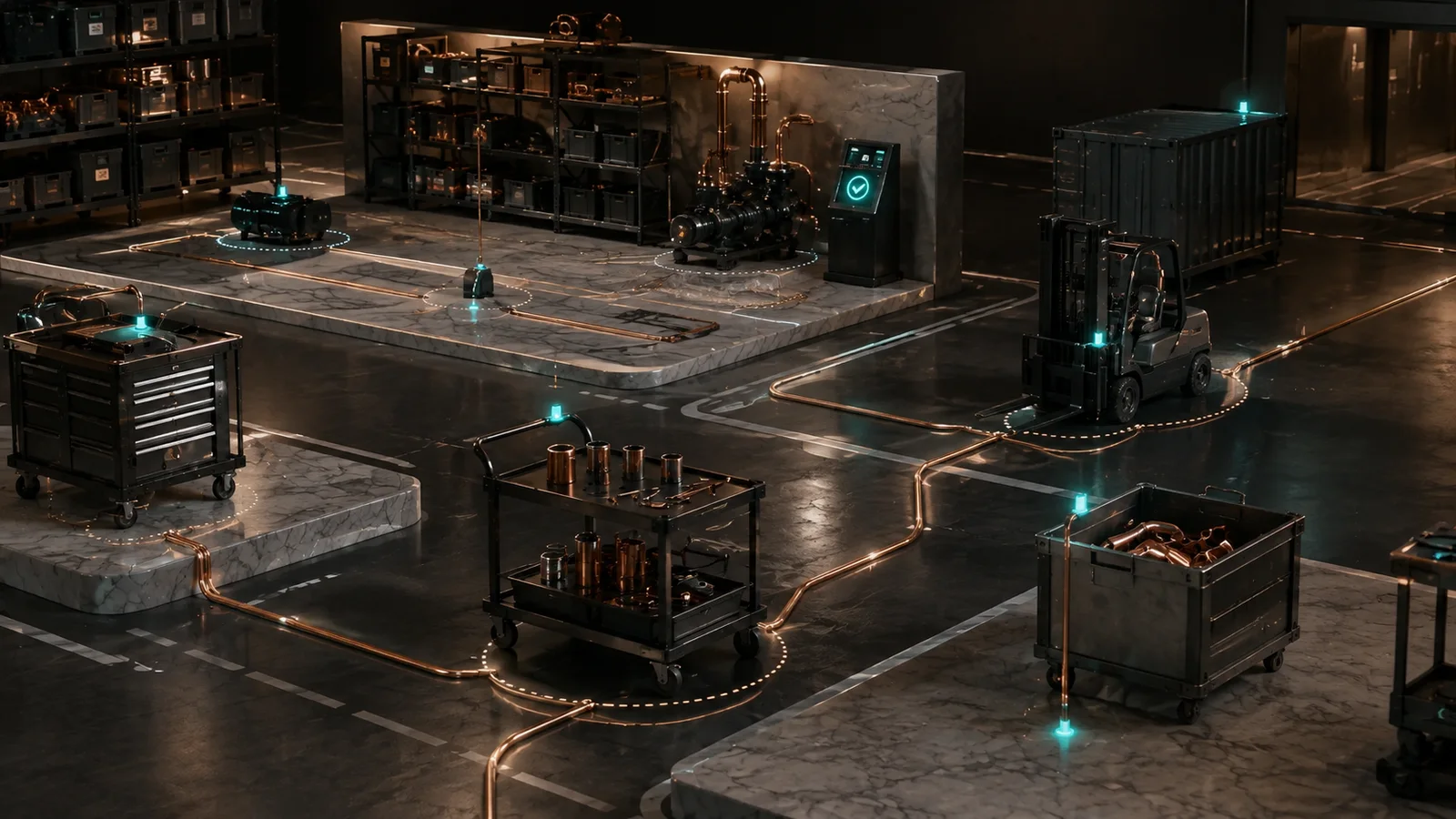
Practical example
Sensors, IoT & Telemetry
Combine identification, location, movement, and operating-state events to understand where important assets are and how productively they are used.
Possible engineering approach, not a documented customer result.
Explore example →
Practical example
Sensors, IoT & Telemetry
Preserve a continuous condition record across storage, handling, movement, and equipment operation so excursions can be detected and traced.
Possible engineering approach, not a documented customer result.
Explore example →
Practical example
Sensors, IoT & Telemetry
Use privacy-conscious sensing and operational events to understand how work areas, staging zones, and shared resources are actually used.
Possible engineering approach, not a documented customer result.
Explore example →
Practical example
Sensors, IoT & Telemetry
Qualify measurement identity, freshness, plausibility, completeness, and health before telemetry supports an alert, model, dashboard, or decision.
Possible engineering approach, not a documented customer result.
Explore example →
Practical example
Controlled Industrial Intelligence
Help authorized personnel find, compare, and cite the correct approved manual, procedure, or maintenance record for a specific asset and revision.
Possible engineering approach, not a documented customer result.
Explore example →
Practical example
Controlled Industrial Intelligence
Recognize when multivariable operation departs from comparable normal behavior and present the evidence needed for focused investigation.
Possible engineering approach, not a documented customer result.
Explore example →
Practical example
Controlled Industrial Intelligence
Align equipment, process, material, environmental, maintenance, and quality events to narrow the causes worth investigating.
Possible engineering approach, not a documented customer result.
Explore example →
Practical example
Controlled Industrial Intelligence
Connect process history to measured quality outcomes so changing conditions can focus inspection and process review earlier.
Possible engineering approach, not a documented customer result.
Explore example →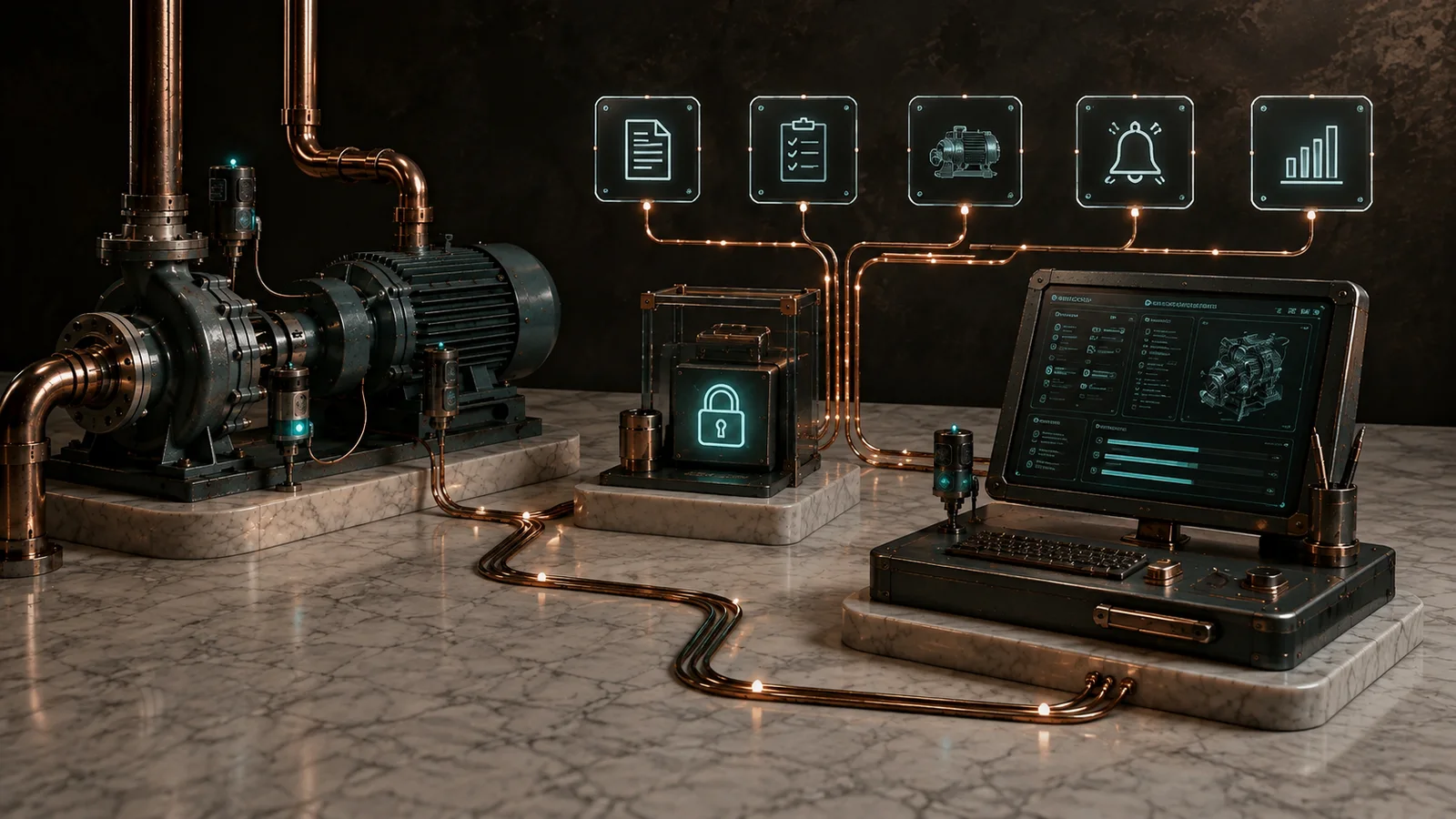
Practical example
Controlled Industrial Intelligence
Combine approved procedures with current operating state and recent history so a shift team can understand an active condition and prepare the right handoff.
Possible engineering approach, not a documented customer result.
Explore example →
Practical example
Controlled Industrial Intelligence
Represent important physical states, relationships, capacities, and constraints so proposed operating changes can be compared before implementation.
Possible engineering approach, not a documented customer result.
Explore example →
Practical example
Controlled Industrial Intelligence
Compare feasible operating plans against explicit objectives, constraints, forecasts, and tradeoffs to support a better next decision.
Possible engineering approach, not a documented customer result.
Explore example →
Practical example
Controlled Industrial Intelligence
Coordinate approved information and business-system tasks through least-privilege tools, structured actions, current-state checks, and explicit approval points.
Possible engineering approach, not a documented customer result.
Explore example →Article
Maintenance Planning
Compare holding a critical spare, repairing a failed unit and reserving supplier stock. Inspect a fictional decision record linking consequence, serviceability and recovery evidence.
Read article →9 min
Article
Equipment monitoring
Compare compressor runtime with production hours and decide what to investigate before assuming there is a leak.
Read article →5 minArticle
Equipment monitoring
Use temperature, door events, recovery and data freshness to plan a read-only walk-in cooler monitoring pilot.
Read article →5 minArticle
Equipment monitoring
Compare supported controller access and external sensing to capture machine-state history around one maintenance question.
Read article →5 minArticle
Equipment monitoring
Compare installed cost, measurement quality, connectivity and support before choosing equipment monitoring hardware.
Read article →5 min
Article
Facilities monitoring
Compare main-meter flow with scheduled uses and decide where a submeter or local leak sensor would help.
Read article →5 min
Article
Facilities monitoring
Compare an existing signal, a transmitter and a fixed camera, and learn how to validate and flag unreadable readings.
Read article →5 min
Article
Facilities monitoring
Build a read-only exception report that distinguishes completed exercise, alarms and missing evidence across sites.
Read article →5 minCustomer discovery, agent-assisted buying, product information, pricing, and dependable order fulfillment.

Article
Retail traffic and queue measurement
Compare doorway beams and overhead distance sensors, validate entry and queue counts, and use aggregate checkout ratios without tracking individual shoppers.
Read article →9 min
Article
Smart coolers and micro-markets
Combine shelf weights, camera evidence and door events to reconcile removals and returns, handle uncertain baskets and test a smart cooler before charging shoppers.
Read article →10 min
Article
Electronic shelf labels
Reconcile electronic shelf labels with active checkout prices, handle missed updates, and evaluate a Bluetooth or mixed-radio gateway in a controlled retail pilot.
Read article →8 min
Article
Commerce & customers
A small launch becomes a business only when demand, delivery, claims, support, and unit economics work together.
Read article →4 min
Article
Commerce & customers
Know which data enters a pricing system, who sets its objective, and how independent decisions remain accountable.
Read article →5 min
Article
Commerce & customers
Clear service facts, accessible pages, and dependable next steps help visitors and software understand what you actually offer.
Read article →5 min
Article
Commerce & customers
Use simulated personas to sharpen hypotheses and research questions, then validate important decisions with real evidence.
Read article →5 min
Article
Commerce & customers
Prepare for agent-assisted buying by making the offer clear, the transaction explicit, and the support path dependable.
Read article →5 min
Practical example
Coffee retail & production
Bring cafe sales, wholesale orders, subscriptions, purchasing, roasting records, and quality information into a shared planning model.
Illustrative workflow, not a documented customer case study.
Explore example →Propagation, source-water evidence, crop variability, and operating decisions for growing businesses.

Article
Center-pivot end-gun verification
Check the surveyed boundary, sprinkler reach, position quality and water shutoff before trusting an end gun near a road or utility corridor.
Read article →11 min
Article
Hydroponic nutrient dosing
Verify pH and conductivity readings, measure pump output and reservoir mixing time, and stop repeat dosing when the evidence disagrees.
Read article →10 min
Article
Hive monitoring and inspection
Compare hive weight, temperature and sound with weather and management records, and test whether monitoring alerts help prioritize apiary inspections.
Read article →11 min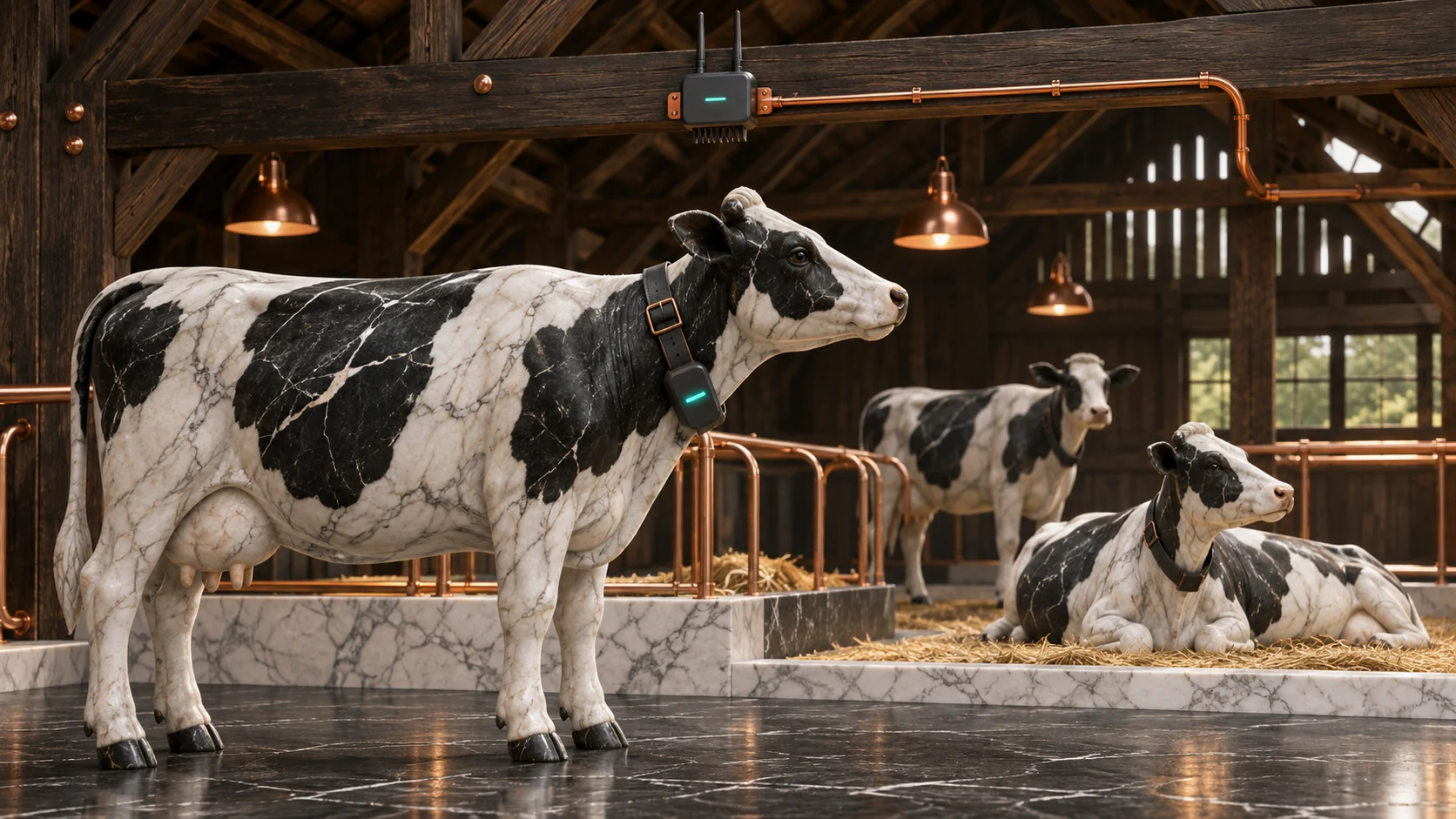
Article
Dairy wearable alerts and barn coverage
Separate changes in activity and rumination from missing wearable data, test a barn receiver, and verify follow-up with the herd team.
Read article →11 min
Article
Pheromone traps and pest scouting
Use repeatable trap images to count new catches, separate misses from unreadable intervals, and validate an ESP32 camera in a scouting pilot.
Read article →11 min
Article
Orchard frost and weather monitoring
Measure the temperature inversion at two heights, compare two cold nights, and use wind and wet-bulb evidence to review an approved orchard frost plan.
Read article →11 min
Article
Aquaculture oxygen and aeration
Measure dissolved oxygen where stock are exposed, verify aerator and water response separately, and test the overnight alarm and backup plan.
Read article →10 min
Article
Greenhouse climate and leaf VPD
Use canopy humidity, leaf temperature and equipment feedback to calculate leaf-to-air vapor pressure deficit, check condensation risk and review climate decisions.
Read article →11 min
Article
Remote irrigation and flow verification
Compare supported wireless valve controls and local ESP32 supervision, verify irrigation flow, and test what happens when the radio, battery, or valve fails.
Read article →11 min
Article
Root-zone moisture and irrigation
Use soil moisture, bulk conductivity and temperature at several depths to follow a wetting response, check readings and plan a field pilot.
Read article →11 min
Article
Crop leaf wetness
Connect wet-leaf observations with local conditions and event timing instead of relying on a room-average humidity chart.
Read article →4 min
Article
Canopy airflow commissioning
Check the installed fan arrangement at crop level as canopy structure changes rather than assuming a running motor proves useful circulation.
Read article →4 min
Article
Transplant readiness
Connect actual hardening history, crop inspection, and receiving conditions before releasing a transplant batch for dispatch.
Read article →4 min
Article
Greenhouse screen trials
Compare energy observations with crop and environmental conditions before changing a greenhouse screen's operating pattern.
Read article →4 min
Article
AgTech
Compare crop histories without guessing the cause. Align the observations, inspect exposure timing and competing changes, then decide what a grower-led test could genuinely establish.
Read article →8 min
Article
Propagation and seed records
Compare seed-lot evidence with actual propagation conditions before changing a purchase, sowing plan, or promise to a customer.
Read article →5 min
Article
Growing area turnover
Separate crop clearance, task completion, verification, and area release so the next crop does not arrive ahead of readiness.
Read article →4 min
Article
Greenhouse scouting follow-up
Make trap counts and crop observations comparable, then turn uncertain findings into specific follow-up inspections.
Read article →4 min
Article
AgTech
Make crop estimates useful before the planning deadline. Keep the packing plan connected to a clearly defined crop quantity, an accountable review and visible unanswered questions.
Read article →8 min
Article
AgTech
Choose measurements around a grower's next decision. Connect crop, place, time, actual equipment events and clearly defined outcomes before adding more sensors.
Read article →8 min
Article
Crop order changes
Review changed customer requests against planted varieties, growing stage, and existing allocations before promising an alternative.
Read article →4 min
Article
Fruit-set investigation
Follow comparable flowers and their conditions to investigate poor fruit set without jumping from correlation to a single cause.
Read article →4 min
Article
Irrigation-water evidence
A familiar pH reading is not a complete description of irrigation source water. Make the laboratory report part of the growing record.
Read article →5 min
Article
AgTech
Follow one picked crop group through packing and review. Keep its records, classifications and unanswered questions clear enough for the grower and packing lead to act on.
Read article →7 min
Article
AgTech
Bring facility findings, trustworthy observations and the grower's review into one clear incident record. Keep the open questions visible without turning a dashboard status into operating permission.
Read article →8 min
Practical example
AgTech & Controlled Environments
Connect crop identity, growing-zone conditions, equipment behavior, interventions, and harvest outcomes so variability can be investigated instead of guessed.
Possible engineering approach, not a documented customer result.
Explore example →
Practical example
AgTech & Controlled Environments
Connect root-zone condition, water delivery, nutrient concentration, crop stage, equipment state, and runoff to controlled irrigation decisions.
Possible engineering approach, not a documented customer result.
Explore example →Try a broader phrase, another industry, or a different content type. Clear filters to browse the complete library.